Commercial demolition and strip-outs
Interior strip-outs and full building demolition, planned so hazardous materials come out first and the waste is sorted before it leaves the site.
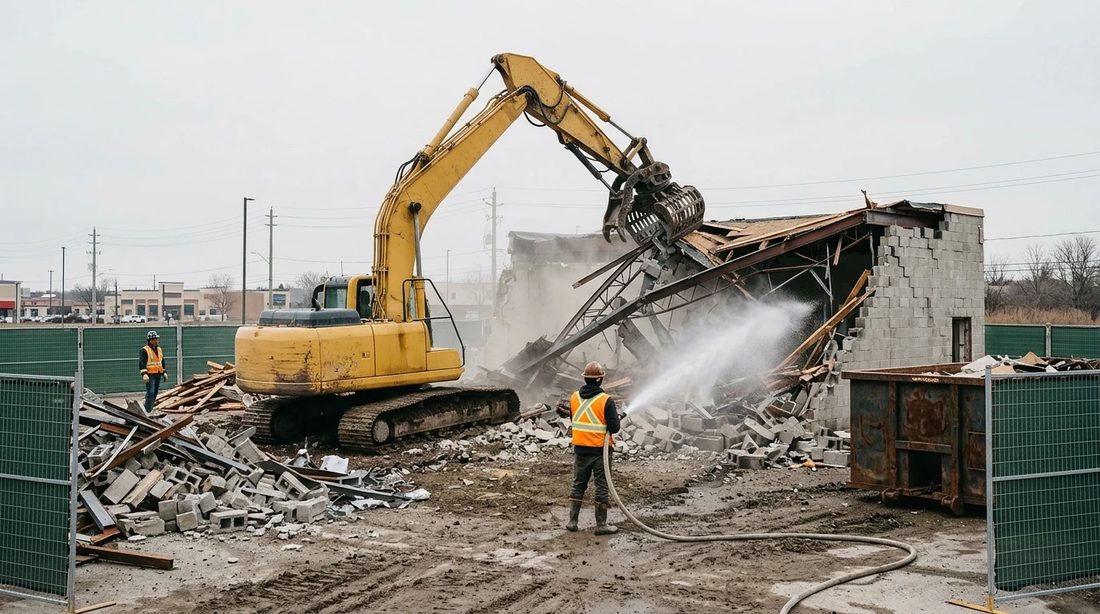
The order of a demolition
Most of a demolition is decided before a machine arrives. The first three steps are paperwork and protection.
What we take down
- Interior strip-out
- Partitions, ceilings, flooring, millwork and services removed back to the base building.
- Selective demolition
- Part of a building removed while the rest stays in use: an opening in a wall, a floor, a wing.
- Full demolition
- The whole building taken down to grade.
- Foundations and slabs
- Footings, walls and slabs removed, and the excavation backfilled and compacted.
What the law requires first
- Designated substances
- The owner must identify asbestos, lead, silica and other designated substances on the site and give the list to bidders before a contract is made (Occupational Health and Safety Act, section 30).
- Asbestos
- Asbestos-containing material that the work may disturb is removed before demolition, by the procedure set in Ontario Regulation 278/05.
- Demolition permit
- Issued by the municipality under the Building Code Act. The utilities are disconnected first.
- Engineer’s review
- A professional engineer reviews the demolition where the building is over 3 storeys or over 600 m² in building area, or has pre-tensioned or post-tensioned members (Building Code, Division C, 1.2.2.3.).
- Notice of Project
- Filed with the Ministry of Labour before work starts where labour and materials are expected to exceed $50,000.
- Locates
- Underground services are located before foundations are removed.
Where the material goes
A building comes down as a few large streams of material. Keeping them apart on site is what makes them recyclable.
- Concrete, block and brick: crushed for reuse as aggregate and fill
- Steel, copper and aluminum: sent to scrap recyclers
- Clean wood: separated from painted and treated wood
- Drywall, roofing and mixed debris: to a licensed transfer station
- Hazardous materials: packaged and sent to licensed disposal, with the paperwork kept for the owner
Demolition questions
Do you handle the permit and the utility disconnections?
We prepare the demolition permit application and coordinate the gas, hydro, water and telecom disconnections it depends on. Disconnection requests are made by the owner or with the owner’s authorization.
Can part of a building stay in use during demolition?
Yes. Selective demolition is planned around the structure that stays and the people who remain: temporary support, hoarding, dust control and working hours are set before work starts.
Can you salvage materials or equipment?
Yes. Tell us what is to be kept and it is removed and set aside before the strip-out begins.
Do you leave the site ready to build on?
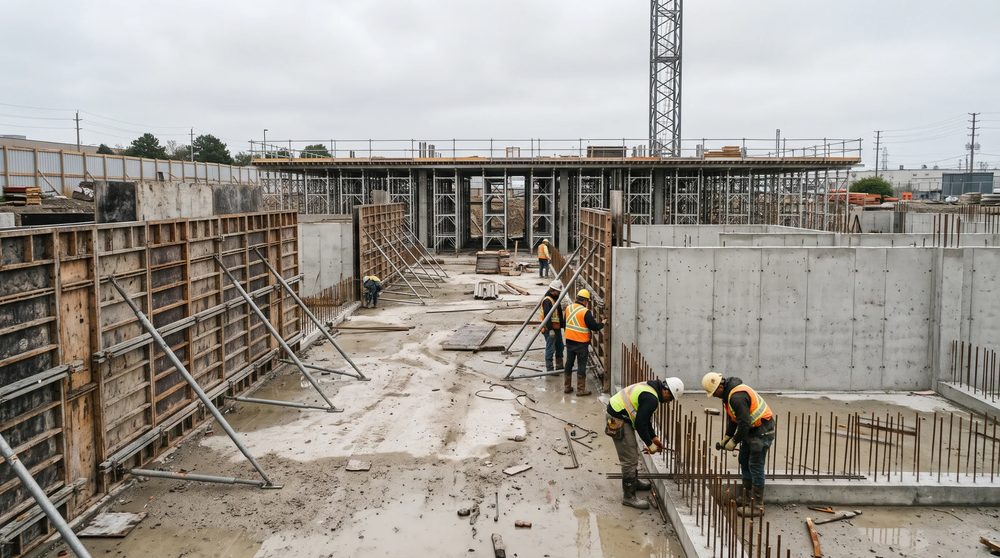
If that is in the scope. Foundations can be removed, the excavation backfilled in compacted lifts and the site graded for the next contractor.
Have a building or an interior to take down?
Send the address, the drawings if there are any, and the designated substances report.